
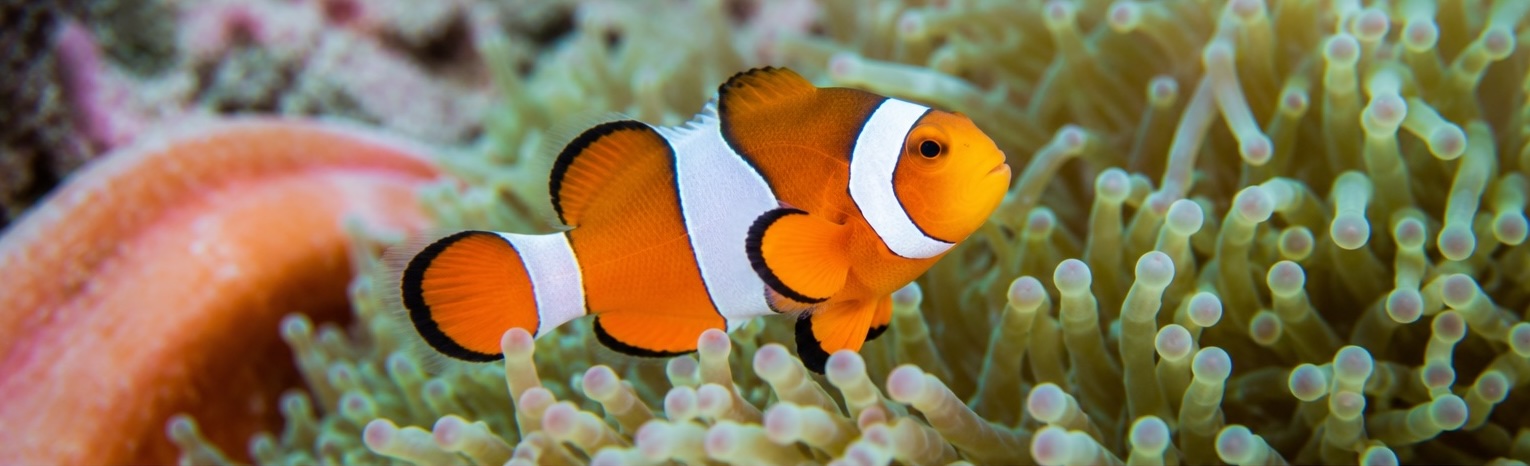
When most people think of clownfish, they picture a bright orange fish with white stripes darting between the tentacles of a sea anemone. Thanks to a certain animated film, clownfish have become one of the most recognisable marine species on Earth.
But behind that cheerful appearance lies one of the most remarkable survival strategies in the animal kingdom.
Meet the Clownfish
Clownfish belong to the genus Amphiprion, with around 30 recognised species found throughout the warm tropical waters of the Indian and Pacific Oceans.
Most species grow to between 7 and 15 cm in length, making them relatively small fish, but what they lack in size they more than make up for in personality.
Divers often describe clownfish as fearless. Despite their tiny stature, they'll readily swim toward much larger fish—or even curious divers—to defend their home.
A Home Unlike Any Other
Clownfish are famous for their close relationship with sea anemones. To almost every other fish, an anemone's tentacles are deadly. Thousands of microscopic stinging cells (called nematoc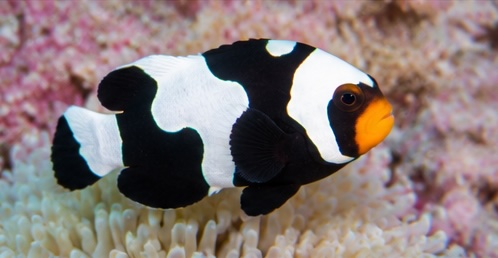 ysts) deliver venom capable of paralysing prey almost instantly. Yet clownfish weave effortlessly through these tentacles without being harmed.
Before fully moving into an anemone, a clownfish performs an elaborate "acclimatisation dance," gently brushing against the tentacles over time. This allows it to coat itself in a protective mucus layer that prevents the anemone from recognising it as food.
Once accepted, the relationship benefits both partners.
The anemone provides the clownfish with; protection from predators, a safe place to sleep and a secure nursery for their eggs, while the clownfish removes parasites from the anemone, cleans away debris, chases away butterflyfish and other predators, and provides nutrients through its waste products
This is one of the ocean's finest examples of mutualism—a partnership where both species benefit.
Every clownfish begins life as a male.
Now for the fact that surprises almost everyone.
If the dominant female of the group dies, the largest male undergoes a complete biological transformation, becoming the new female and taking over as the breeding partner.
It sounds like science fiction—but beneath the waves, it's simply another example of nature finding an ingenious solution.
Clownfish live in small social groups, each centred around a single sea anemone.
The hierarchy is simple: One large breeding female, one slightly smaller breeding male, and several smaller non-breeding males.
The female is always the largest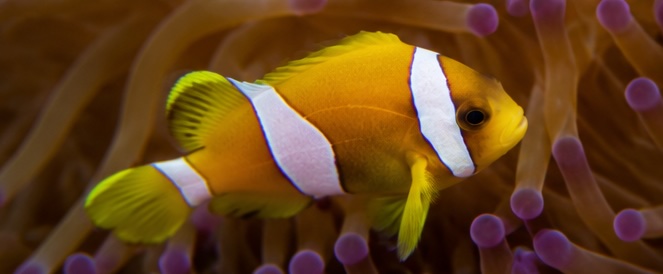 fish in the group and firmly in charge.
If she dies, something extraordinary happens. The breeding male doesn't search for another female. He becomes one.
Over the course of several weeks, hormonal changes trigger a complete transformation. The fish's reproductive organs change, behaviour shifts, and it becomes the new breeding female.
The largest juvenile male in the group then matures into the breeding male.
Remarkably, this transition only works in one direction. Once a clownfish becomes female, it never changes back.
Why Does This Happen?
At first glance, this seems incredibly unusual.
But from an evolutionary perspective, it makes perfect sense.
Clownfish rarely leave the protection of their anemone because venturing into open water dramatically increases the risk of predation. Finding another mate could be dangerous—or impossible.
By ensuring that a breeding female can always be replaced from within the existing group, clownfish maximise their chances of reproductive success without anyone needing to leave the safety of home.
Tiny Fish, Big Attitude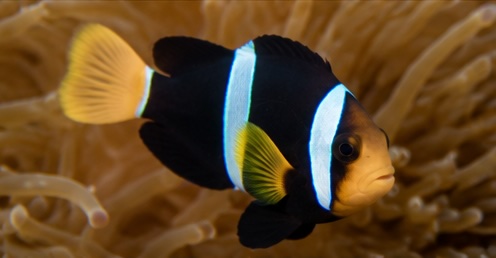
Anyone who has spent time underwater has probably experienced the confidence of a clownfish.
Despite being only a few centimetres long, they regularly challenge much larger fish—and divers who venture too close to their eggs.
Many underwater photographers have laughed after receiving a determined "attack" from an angry clownfish no bigger than a thumb.
While these attacks are harmless, they demonstrate just how fiercely these little fish protect their families.
It's a reminder that courage isn't always measured in size.
Family Life
When breeding season arrives, the pair carefully cleans a flat surface near the base of their anemone. The female lays hundreds of bright orange eggs, which the male immediately fertilises.
From that moment on, dad takes over, and the female concentrates on defending the territory.
Once the eggs hatch, the tiny larvae drift into the open ocean, where they spend several weeks as plankton before eventually settling onto a reef and searching for an anemone of their own.
Only a small percentage survive this vulnerable stage, making every successful adult clownfish something of a miracle.
Not Every Anemone Will Do
Although there are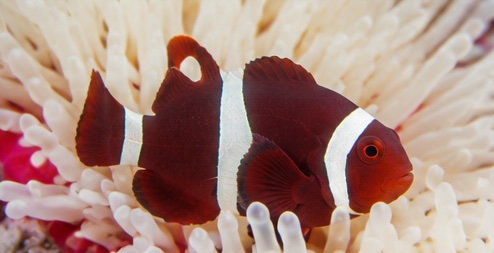 over 1,000 species of sea anemone worldwide, clownfish only associate with around ten species.
Even then, different clownfish species have preferred hosts.
This specialised relationship has developed over millions of years through evolution, making clownfish and their anemones remarkably dependent on one another.
Seeing Clownfish While Diving
One of the joys of scuba diving is that clownfish are often among the first reef fish new divers recognise.
The best encounters happen when you simply stop, remain still, and observe.
Instead of swimming away, clownfish often become curious, emerging cautiously from their anemone before returning to safety.
Watching a family interact—parents tending eggs while juveniles hover nearby—offers a fascinating glimpse into one of the reef's most complex social systems.
Sometimes the smallest creatures tell the biggest stories.
More Than Just a Pretty Face
Clownfish are far more than colourful reef inhabitants.
They are devoted parents, fearless defenders, expert partners in one of nature's greatest symbiotic relationships, and living proof that evolution often finds ingenious solutions to life's challenges.
So the next time you spot a clownfish peeking from the safety of its anemone, remember that you're looking at one of the ocean's greatest survival stories.